

What Is Used To Make Makeup
Cosmetics are not a modernistic invention. Humans accept used various substances to alter their appearance or accentuate their features for at least 10,000 years, and possibly a lot longer.
Women in Ancient Egypt used kohl, a substance containing powdered galena (pb sulphide—PbS) to darken their eyelids, and Cleopatra is said to accept bathed in milk to whiten and soften her peel. By 3000 B.C men and women in Communist china had begun to stain their fingernails with colours according to their social form, while Greek women used poisonous lead carbonate (PbCO3) to attain a stake complexion. Clays were basis into pastes for cosmetic use in traditional African societies and indigenous Australians still use a wide range of crushed rocks and minerals to create body paint for ceremonies and initiations.
Today, cosmetics are large business concern. Co-ordinate to the 2011 Household Expenditure Survey, conducted every five years by the Australian Agency of Statistics, Australians spend around $iv.v billion on toiletries and cosmetic products every year. Cosmetic advert, previously directed mainly at women, is at present targeting a wider audience than ever.
Cosmetic chemicals interactive
Select the dazzler products yous use beneath and detect out how many chemicals they contain!
Full products: 0
Total chemicals: 0
What is a cosmetic?
In Australia, a cosmetic is defined under the Industrial Chemical (Notification and Assessment) Act 1989 every bit 'a substance or preparation intended for placement in contact with any external part of the man trunk' (this includes the mouth and teeth). Nosotros use cosmetics to cleanse, perfume, protect and alter the appearance of our bodies or to change its odours. In contrast, products that claim to 'modify a actual procedure or prevent, diagnose, cure or alleviate whatsoever affliction, ailment or defect' are called therapeutics. This distinction means that shampoos and deodorants are placed in the cosmetics category, whilst anti-dandruff shampoos and antiperspirants are considered to be therapeutics.
Regulation and safety
In Australia, the importation, industry and apply of chemicals—including those used in cosmetics—are regulated past the Australian Government'due south National Industrial Chemicals Notification and Assessment Scheme (NICNAS). NICNAS works to ensure that chemicals used in consumer products do non cause significant harm to users or to the surroundings.
In the example of cosmetics, every ingredient contained within the production must be scientifically assessed and approved by NICNAS before being manufactured or imported into Australia and before they can be used in consumer products. Where appropriate, NICNAS sets limits on the level at which a chemical can exist used in a product and likewise conducts reviews on chemicals when new evidence arises.
Cosmetic products that make an additional therapeutic claim (such every bit moisturisers that as well lighten the skin) are regulated by a different system—the Therapeutic Appurtenances Administration (TGA).
Cosmetics and other personal care items must also be labelled in accordance with the Trade Practices (Consumer Product Information Standards, Cosmetics) Regulations 1991. This regulation requires that all intentionally added ingredients are listed on the product label, and is enforced by the Australian Competition and Consumer Commission (ACCC).
What do cosmetics contain?
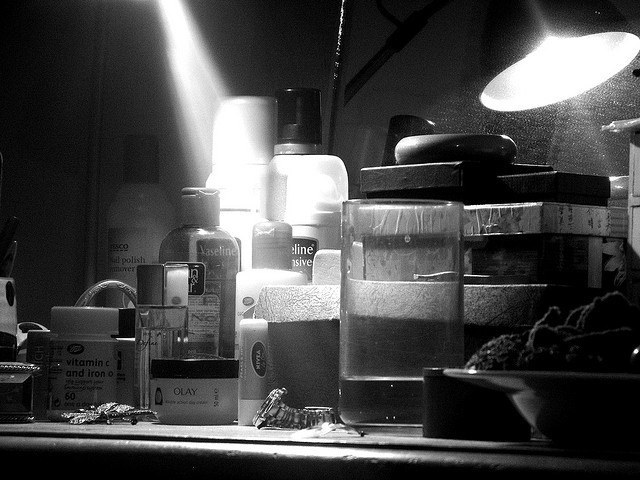
At that place are thousands of different cosmetic products on the market, all with differing combinations of ingredients. In the United States lone there are approximately 12,500 unique chemical ingredients approved for use in the manufacture of personal care products.
A typical product will contain annihilation from xv–50 ingredients. Considering the average woman uses between 9 and fifteen personal intendance products per day, researchers take estimated that, when combined with the addition of perfumes, women place around 515 individual chemicals on their skin each day through corrective employ.
But what exactly are nosotros putting on our skin? What practise those long names on the ingredient listing mean and what exercise they do? While the formula of each product differs slightly, well-nigh cosmetics contain a combination of at least some of the post-obit cadre ingredients: water, emulsifier, preservative, thickener, emollient, colour, fragrance and pH stabilisers.
Water
If your product comes in a canteen, chances are the showtime ingredient on the list is going to be water. That's right, adept old H2O. H2o forms the basis of most every blazon of cosmetic product, including creams, lotions, makeup, deodorants, shampoos and conditioners. Water plays an important part in the process, often acting as a solvent to dissolve other ingredients and forming emulsions for consistency.
Water used in the conception of cosmetics is not your everyday, regular tap h2o. It must be 'ultra-pure'—that is, free from microbes, toxins and other pollutants. For this reason your label may refer to it as distilled water, purified h2o or but aqua.
Emulsifiers
The term emulsifiers refers to whatsoever ingredient that helps to keep unlike substances (such as oil and water) from separating. Many cosmetic products are based on emulsions—small-scale droplets of oil dispersed in h2o or small droplets of water dispersed in oil. Since oil and water don't mix no thing how much you shake, alloy or stir, emulsifiers are added to change the surface tension between the water and the oil, producing a homogeneous and well-mixed product with an even texture. Examples of emulsifiers used in cosmetics include polysorbates, laureth-4, and potassium cetyl sulfate.
Preservatives
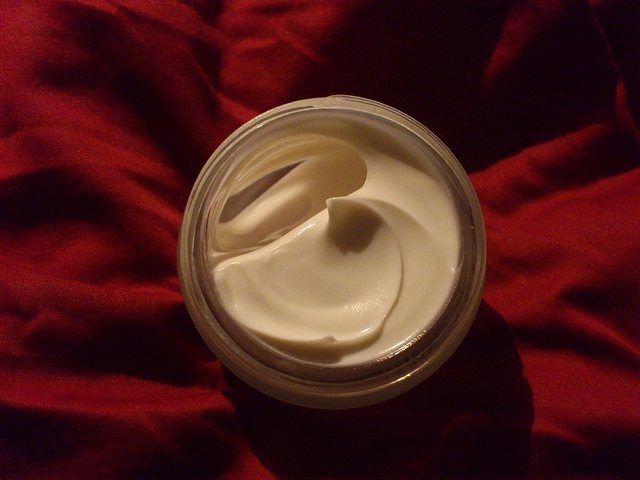
Preservatives are important ingredients. They are added to cosmetics to extend their shelf life and preclude the growth of microorganisms such as leaner and fungi, which can spoil the product and possibly damage the user. Since most microbes alive in h2o, the preservatives used need to be h2o-soluble, and this helps to decide which ones are used. Preservatives used in cosmetics can exist natural or synthetic (man-made), and perform differently depending on the conception of the product. Some will require low levels of effectually 0.01%, while other will crave levels equally high as 5%.
Some of the more popular preservatives include parabens, benzyl alcohol, salicylic acrid, formaldehyde and tetrasodium EDTA (ethylenediaminetetra-acetic acrid).
Consumers who purchase 'preservative-costless' products should be aware of their shorter shelf life and be conscious of whatsoever changes to the look, feel or odour of the product that may bespeak it has gone off.
Thickeners
Thickening agents piece of work to give products an appealing consistency. They can come from four different chemical families:
Lipid thickeners are ordinarily solid at room temperature but can be liquefied and added to cosmetic emulsions. They work past imparting their natural thickness to the formula. Examples include cetyl alcohol, stearic acid and carnauba wax.
Naturally derived thickeners come, as the proper noun suggests, from nature. They are polymers that absorb water, causing them to swell up and increment the viscosity of a production. Examples include hydroxyethyl cellulose, guar glue, xanthan mucilage and gelatin. Cosmetics with a consistency that is too thick can exist diluted with solvents such every bit water or booze.
Mineral thickeners are as well natural, and as with the naturally derived thickeners mentioned above, they absorb water and oils to increase viscosity, merely give a dissimilar upshot to the concluding emulsion than the gums. Popular mineral thickeners include magnesium aluminium silicate, silica and bentonite.
The final group are the synthetic thickeners. They are oft used in balm and foam products. The most common synthetic thickener is carbomer, an acrylic acid polymer that is h2o-swellable and can be used to form clear gels. Other examples include cetyl palmitate, and ammonium acryloyldimethyltaurate.
Emollient
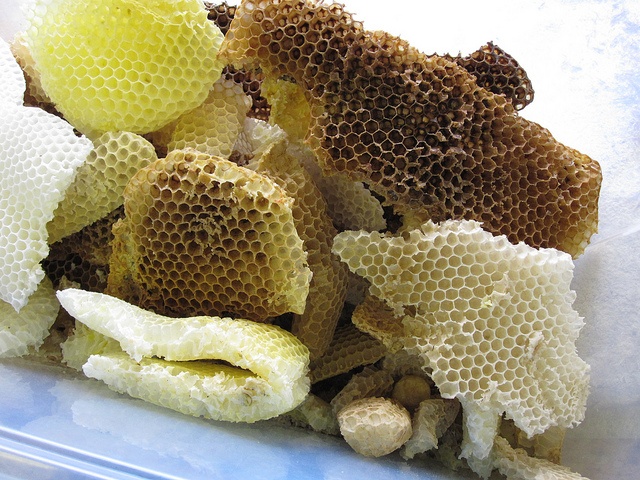
Emollients soften the skin past preventing h2o loss. They are used in a wide range of lipsticks, lotions and cosmetics. A number of unlike natural and synthetic chemicals work as emollients, including beeswax, olive oil, coconut oil and lanolin, too as petrolatum (petroleum jelly), mineral oil, glycerine, zinc oxide, butyl stearate and diglycol laurate.
Colouring agents/pigments
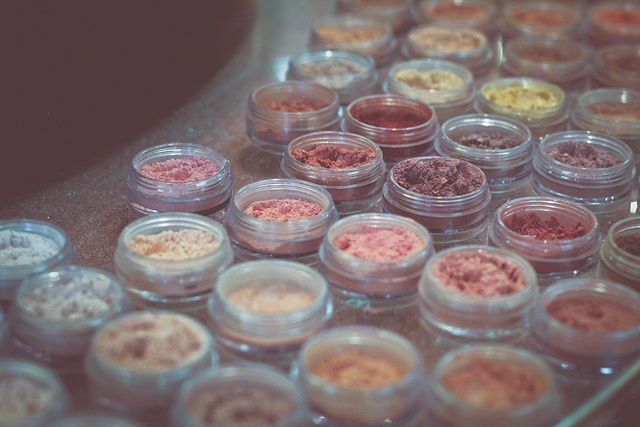
Ruby lips, smoky eyes and rosy cheeks; information technology is the purpose of many cosmetics to accentuate or alter a person's natural colouring. A huge range of substances are used to provide the rainbow of appealing colours you discover in the makeup stand up. Mineral ingredients tin can include iron oxide, mica flakes, manganese, chromium oxide and coal tar. Natural colours can come from plants, such as beet powder, or from animals, like the cochineal insect. The latter is often used in red lipsticks and referred to on your ingredient listing as carmine, cochineal extract or natural red 4.
Pigments can be divide into two main categories: organic, which are carbon-based molecules (i.eastward. organic in the chemistry context, not to exist dislocated with the employ of the discussion to promote 'natural' or 'non-synthetic' or 'chemical-gratis' products) and inorganic which are generally metal oxides (metal + oxygen and often another elements too). Inorganic should not be confused with 'synthetic' or 'unnatural' as most of the inorganic metal oxide pigments do occur naturally as mineral compounds.
The 2 about common organic pigments are lakes and toners. The lake pigments are made past combining a dye colour with an insoluble substance like alumina hydrate. This causes the dye to become insoluble in water, making it suitable for cosmetics where h2o-resistant or waterproof properties are desired.
A toner pigment is an organic pigment that has not been combined with whatever other substance.
The inorganic metal oxide pigments are usually duller than the organic pigments, just are more resistant to heat and light, providing a longer-lasting colour.
Glimmer and shine
Shimmering effects can exist created via a range of materials. Some of the most common ones are mica and bismuth oxychloride.
Cosmetic mica typically comes from muscovite (KAl2(AlSi3O10)(F,OH)2) besides known every bit white mica. It naturally forms in flaky sheets and these are crushed up into fine powders. The tiny particles in the powders refract (curve) light, which creates the shimmering effect common in many cosmetics. Mica coated with titanium dioxide gives a whitish advent when looked at straight on, but then produces a range of iridescent colours when viewed from an bending.
Bismuth oxychloride (BiClO) is used to create a silver grey pearly upshot. This compound occurs naturally in the rare mineral bismoclite, but is usually produced synthetically and so is besides known as synthetic pearl.
The size of the particles used to create pearly and shimmering looks impact the degree of blink the product has. The smaller the particle size (fifteen–60 microns, where i micron is one millionth of a meter), the less lustrous the powder will be, and more coverage information technology gives. Larger particle sizes, upwards to 500 microns, give a more than glittery lustre and are more than transparent.
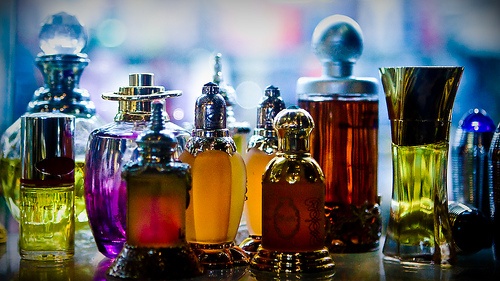
Fragrances
No thing how effective a corrective may exist, no 1 will want to use it if it smells unpleasant. Consumer research indicates that smell is i of the key factors in a consumer'south decision to purchase and/or use a production.
Chemicals, both natural and synthetic, are added to cosmetics to provide an highly-seasoned fragrance. Fifty-fifty 'unscented' products may comprise masking fragrances to mask the smell of other chemicals.
The term 'fragrance' is ofttimes a generic term used by manufacturers. A single listing of fragrance on your product'south ingredient list could stand for dozens or even hundreds of unlisted chemical compounds which were used to create the final individual fragrance.
Manufacturers do not have to list these individual ingredients as fragrance is considered to exist a trade undercover .
In that location are over three,000 chemicals used to formulate the huge range of fragrances used in consumer products worldwide. A comprehensive listing has been published by the fragrance manufacture. All the ingredients on this list take passed the International Fragrance Association (IFRA) safety standards for use in commercial products. Withal, without knowing which individual ingredients went in to making up the fragrance of a production, consumers can find it difficult to make informed choices. If consumers are concerned they should await for fragrance gratuitous products and buy from companies that label their products more comprehensively.
Are cosmetics dangerous?
There's nothing similar a bit of controversy to generate some media buzz. For over a decade there accept been recurring reports in both the media and on hundreds of internet sites relating to potentially toxic substances nowadays in cosmetics (atomic number 82, mercury, parabens) and the dangers they pose to the public. Should consumers exist worried? Are these claims backed up past reputable, published scientific research or have the findings been misinterpreted and exaggerated? Let's take a look …
Parabens
Parabens are a class of chemicals usually used as preservatives in food, therapeutic and cosmetic products. They are derived from para-hydroxybenzoic acrid (PHBA), which occurs naturally in many fruits and vegetables. Parabens come up in several forms: methylparaben, ethylparaben, propylparaben, butylparaben and isobutylparaben. They are the most widely used preservative in personal care products. This is because they are incredibly good at doing their job—keeping your products mould and leaner free—and are also cost effective.
The use of parabens in cosmetics hit the media in 2004 later a research written report conducted by Dr. Philippa Darbre of the Academy of Reading in England reported findings that xviii out of xx breast cancer tissue samples independent parabens. As parabens can weakly mimic the actions of oestrogen, and equally oestrogen can enhance tumour growth, this was thought to exist a problem. The presence of parabens in breast tumours was picked upwardly by the media and presented as bear witness that parabens contribute to breast cancer. This was incorrect.
While the presence of parabens is notable, the study found no straight evidence that they had acquired the cancer or contributed to its growth. Chest tumours accept a large blood supply, and so it is likely that whatsoever chemical found in the blood stream will be present in the tumour.
In a later statement to the media, Dr. Darbre, referring to her 2004 study, said 'No claim was made that the presence of parabens has acquired the breast cancers.'
There have since been dozens of studies undertaken around the globe on the safety of parabens, which time and again have exhaustively demonstrated that parabens are cleaved down, metabolised and excreted harmlessly from the body.
Currently, both in Australia and internationally, the science customs consider the utilize of parabens in cosmetics to be safe.
In response to consumer demand, some companies have begun to manufacture paraben complimentary products, which consumers can buy if they are concerned.
Aluminium
Concerns regarding cancer are also linked to the utilise of aluminium in deodorants and anti-perspirants. In the early 2000s various news outlets reported credible links between the use of antiperspirants containing aluminium and breast cancer. Similar reports continued the use of such products to the onset of Alzheimer's disease. These supposed links accept never been scientifically proven despite multiple studies.
Aluminium works to block the sweat ducts to reduce sweating. Some argue that this process prevents us from releasing toxins, causing them to build upwards inside our lymph glands. However, breast cancer tumours do not originate in the lymph nodes, they start in the breast, and travel to the lymph nodes subsequently. Another study constitute no divergence in the concentration of aluminium between the cancer and the surrounding tissue.
Currently there is no clear link between the use of nether-arm products containing aluminium and breast cancer.
Too, studies have shown no relationship between Alzheimer'due south illness and deodorant/antiperspirant utilise. Every 24-hour interval, humans are exposed to aluminium through food, packaging, pots and pans, medicine and even air and water. The official position of both the Alzheimer's Lodge (Us) and Alzheimer'due south Australia is that a link between ecology aluminium absorption and Alzheimer'south disease seems 'increasingly unlikely'.
Despite these findings, some manufacturers have begun producing aluminium-free products for consumers who still concord concerns.
Triclosan
Triclosan was originally developed as an anti-bacterial agent for use in hospitals, primarily every bit a surgical scrub. However its usefulness has seen it increasingly added to a wide range of consumer products including deodorant, lather, toothpaste, cosmetics and full general house-hold cleaning products. Triclosan is also used equally a pesticide and can, nether certain circumstances, pause down into potentially toxic chemicals such as dioxins.
Triclosan hit the news in 2000 afterward findings published by the National Academy of Sciences (US) noted rising levels of the chemical existence detected in the environment and its increasingly broad utilize in everyday products as concerns.
Studies conducted by scientists at the University of California found that prolonged exposure to triclosan causes liver fibrosis and cancer in laboratory mice. Other studies accept suggested triclosan tin can disrupt hormones, impair musculus contraction and reduce bacterial resistance.
Whilst the over-utilise of triclosan in products warrants farther study, Australian experts take highlighted its value and importance when used correctly and in moderation. Professor of Dental Science at the Academy of Queensland, Dr. Laurie Walsh, noted that the chemic has been proven to fight various atmospheric condition such as gingivitis, inflammation and bleeding gums.
In Australia, a total adventure assessment conducted past NICNAS found no cause for public concern in general, though did recommend controls for maximum concentrations of triclosan (0.3%) in personal care and cosmetic products. At present, cosmetic products containing more than 0.three% triclosan must clearly carry the word 'poison' on the label—not the best marketing strategy for producers.
The American Food and Drug Administration (FDA) is planning to release an updated report on Triclosan in 2016, though in the interim consumers may look for triclosan-free products if they wish.
Formaldehyde
Formaldehyde is an organic chemical compound with a wide multifariousness of uses. Although commonly associated with embalming, it is also used in the industry of building materials, textiles, household cleaning products, plastics, cosmetics and personal care products. It as well occurs naturally in a broad range of foods, for example the humble egg.
Formaldehyde is not typically used in its pure class, only altered slightly and listed nether the name formalin. It works as a preservative to protect products from contamination.
Formaldehyde is classified equally a Group 1 carcinogen (known to cause cancer in humans) past the World Health Organization International Agency for Enquiry on Cancer. It can also cause skin and sensory irritation and animate difficulties in people when inhaled, ingested or if it comes into contact with skin. Then why is it still used in everyday products?
As with other chemicals, it is the concentration present in a production that is important. NICNAS has assessed formaldehyde and set maximum safe limits for its use in cosmetics. Oral products such as toothpastes may merely incorporate up to 0.ane percentage formaldehyde, while boom hardeners tin accept upwardly to 5 percentage. All other cosmetic products (such as shampoos and straightening solutions) can have up to 0.two percent. At these low levels, the use of formaldehyde is accounted to be safe.
NICNAS has noted that people with particularly sensitive skin may withal experience irritation fifty-fifty at these low concentrations.
In 2010, the Australian Competition and Consumer Commission (ACCC) conducted a survey of the formaldehyde concentrations of several cosmetic products that resulted in the voluntary call up of two products that contained unacceptably high concentrations of the chemical.
Phthalates
Phthalates (pronounced THAL-ates) are some other group of chemicals found in some cosmetics that have been red-flagged by ecology groups. They are generally used to make plastic products soft and flexible just can also be constitute in cosmetics like nail polish, hair spray (to brand the products less brittle or stiff) and perfumes.
Phthalates are produced from oil and there are more than 20 types in common use. As the various phthalates have different chemical structures, toxicity profiles and uses, their rubber should not exist generalised as a group, but looked at on an individual basis. Some studies have indicated that at high, recurring concentrations different phthalates tin human action as endocrine disruptors—this ways they upset the hormonal balance in the body and can pb to developmental problems, especially in males. Other studies have indicated at that place may be a link between phthalates and type 2 diabetes.
In response, the European Wedlock and the The states have imposed bans on some types of phthalates for use in cosmetics. Inquiry conducted in Australia has identified a pocket-size level of risk in relation to one phthalate, bis(2-ethylhexyl) phthalate or DEHP, and equally a result NICNAS has prohibited products that contain DEHP above the prescribed level—this generally relates to children'south toys.
Atomic number 82 in your lipstick?
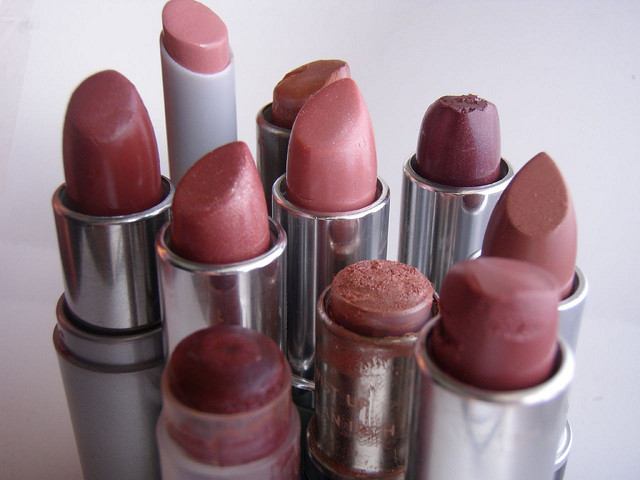
News reports detailing levels of lead and other metals in lipsticks are persistent and recurring, but should consumers be worried? A 2013 report by the University of California Berkley examined the metallic content of 32 different lipsticks. Researchers establish traces of aluminium, manganese (which can cause neurological issues) and titanium in all the products they tested, while 3-quarters of the products contained lead (which affects the nervous organisation, and can crusade learning disabilities in children). Many of the lipsticks and lip glosses also contained nickel and cobalt, as well as cadmium and chromium—both known carcinogens.
Why would manufacturers add these ingredients to their products? The reply is—they don't. They exist in the products equally 'impurities', that is, they are nowadays in other ingredients such equally the wax, oils or the mineral pigments used in the formula. Because of the persistent nature of these substances and the fact they occur in the natural environment, including in h2o, it is nearly impossible to remove all traces of them.
However don't throw your lippy away just yet. The presence of these naturally-occurring elements in lipsticks is non necessarily a trouble—the important event is the level or concentration. Are the the levels high plenty to be considered toxic, or are they low plenty to be accounted safe? Remember, sunlight is besides a proven carcinogen (pare cancer)—but you still become outside and you lot might even sunbathe. Information technology all comes down to dose.
With the exception of chromium, the study concluded that the metallic concentrations were comfortably within the 'adequate daily allowances' as determined past the researchers via a comparison with accepted h2o and air contagion levels. Basically, yous volition consume more lead from drinking water than you will from applying lipstick. Even so, the written report did conclude that further research into the metal content of cosmetic products is necessary, especially with respect to chromium.
Sun creams
While sun creams are non officially cosmetics (they are considered to exist therapeutics), we volition include them here as their use is so mutual, particularly in Australia.
Sunscreens play an important role in protecting our peel from the harmful UVA and UVB rays emitted past the sun. Their employ has been proven to aid prevent certain skin cancers including melanomas and basal cell carcinomas.
In contempo years at that place has been some business concern most nanoparticles (NP) in sunscreens. This relates specially to zinc oxide (ZnO) and titanium dioxide (TiO₂) nanoparticles and their ability to penetrate the pare to achieve cells and the potential toxicity exerted by these chemicals.
The position of the Therapeutic Appurtenances Administration (TGA), based on several published papers (upwards to May 2013) as well every bit reviews of international regime, is that nano-particles are safe. 'Several in vitro and in vivo studies using both brute and human skin have shown that these NPs do not penetrate the underlying layers of pare, with penetration limited to the stratum corneum. This suggests that systemic absorption is unlikely.'
A further study published in 2014 found that when exposed to zinc oxide nanoparticles, human immune cells (called macrophages) effectively captivated the nanoparticles and broke them down.
Based on current evidence, neither TiOtwo nor ZnO nanoparticles are likely to crusade impairment when used as ingredients in sunscreens. There are more risks associated with avoiding suncreams (sunburn, skin cancers) than there are posed by nanoparticles.
Conclusion
While the current scientific thinking on many of these chemicals is that they are safe to use, it is up to each consumer to make their own decision as to whether they purchase and use a product containing certain ingredients or not. Consumers should also effort to purchase reputable brands from established sellers—cheap imports or copies bought online may not have been through the proper testing and assessment process and may non contain what they claim to.
In our pursuit of beauty, it is wise to call back that cosmetics can be complex combinations of chemicals. Achieving fifty-fifty a basic agreement of the long chemical names on a product ingredient list—what they are and what they do—can go a long way to helping consumers brand informed decisions about the products they cull to utilise—certainly helpful when putting on your best confront.

What Is Used To Make Makeup,
Source: https://www.science.org.au/curious/people-medicine/chemistry-cosmetics#:~:text=The%20key%20ingredients%20present%20in,compounds%20they%20are%20made%20of.
Posted by: cropperhassing.blogspot.com
0 Response to "What Is Used To Make Makeup"
Post a Comment